Automotive · Part Identification
Laser Marking for Automotive Manufacturing
Permanent part identification for components, housings and nameplates — serial numbers, DataMatrix codes and logos that survive heat treatment, plating and years of service.
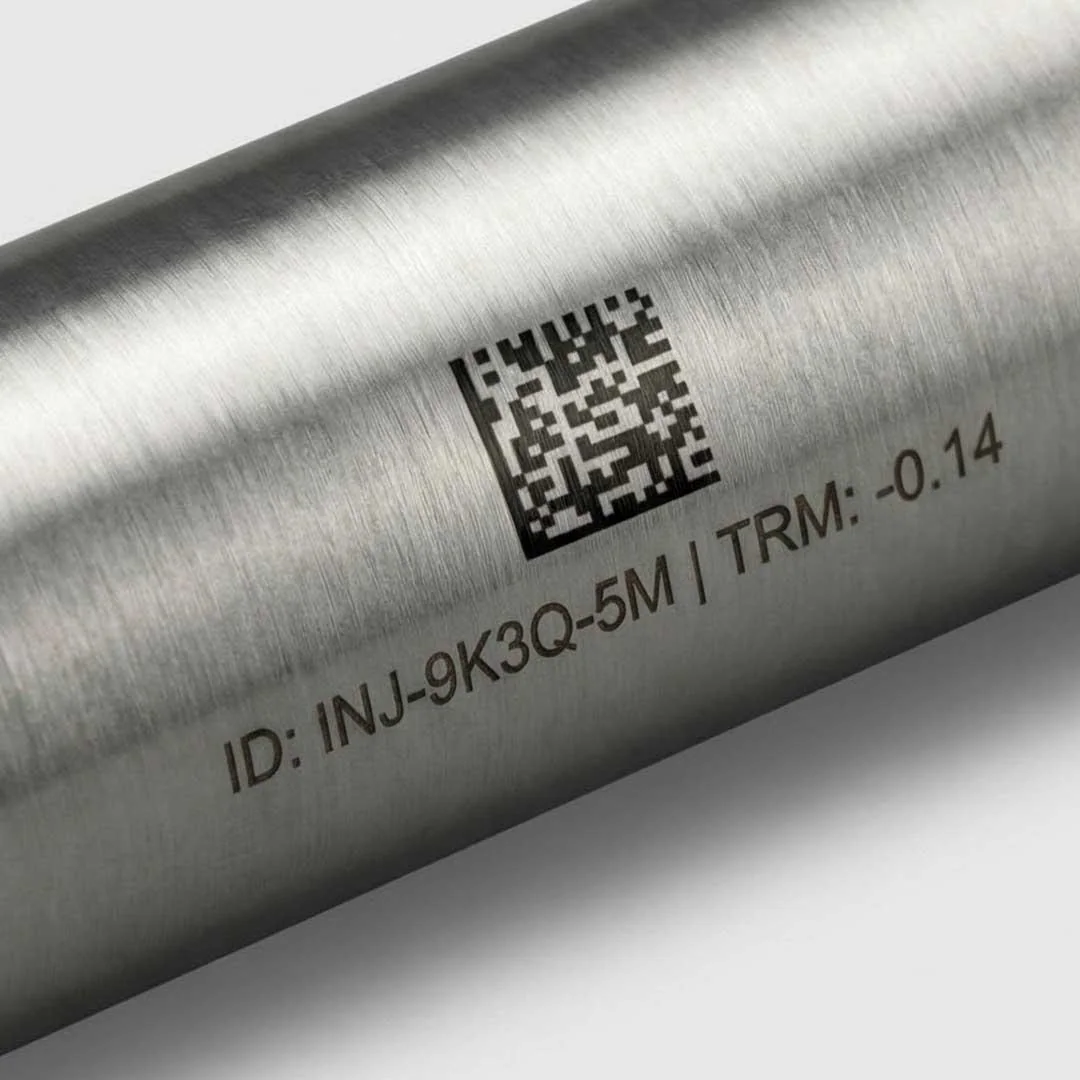
01 — What Can Be Marked
Identification that follows the part for its whole life
Part Numbers
Permanent part numbers on cast, machined and plated components — readable after finishing and assembly.
Serial Numbers
Unique serialization per part, with automatic sequencing from the marking software.
QR Codes
High-contrast QR codes for WIP tracking, service history and warranty records.
Barcodes
Code 128 and other linear codes on steel, aluminum and coated parts.
Logos
Brand marks on housings, brackets and fittings — clean edges on curved surfaces with rotary marking.
Traceability
Full traceability marking — supplier, batch, date and production line in a single readable field.
02 — Recommended Configurations
Material, requirement, machine, configuration
Typical automotive marking jobs and the configurations we recommend. Confirm on your parts with a free sample test.
| Material | Marking Requirement | Recommended Machine | Configuration |
|---|---|---|---|
| Stainless Steel | Black DataMatrix, 12 × 12 mm | Fiber 20 W | F160 lens · 110 × 110 mm field · XY table |
| Aluminum Housing | Logo + serial, 20 × 30 mm | Fiber 30 W | F254 lens · 175 × 175 mm field · rotary axis |
| Cast Iron / Carbon Steel | Deep part number, 5 mm height | Fiber 50 W | F254 lens · repeated passes · dust extraction |
| Anodized Aluminum Trim | Color logo marking | MOPA 30 W | F160 lens · pulse-width tuning · rotary axis |
| ABS Instrument Trim | Fine logo, no melt marks | UV 3 W | F160 lens · low pulse energy · XY table |
| Rubber / Gasket | Batch code on molded seal | CO₂ 30 W | F160 lens · low power · conveyor ready |
Specifications are indicative and confirmed during sample testing on your parts.
03 — Production Requirements
Engineered for the line, not the lab
Automotive marking runs in real production conditions: vibration, dust, heat, and parts arriving in batches with tolerances. The machine is built to hold contrast and position under those conditions.
-
Integration ready. Foot switch, sensor trigger, conveyor and PLC signals — standard I/O on every controller.
-
Repeatable placement. Fiducial and edge detection hold marking position as fixtures and parts drift.
-
Readable forever. The mark is part of the material — it survives plating, heat treatment and service wear.
-
Documented parameters. Every job saved with power, speed, frequency and lens — recalled in one click.
04 — Relevant Machines
Machines we recommend for automotive
Metal Parts
Fiber Laser
Steel, aluminum and alloys — serials, DataMatrix and deep marking.
View machine →
Anodized & Color
MOPA Fiber
Dark marks on selected anodized aluminum and color effects on suitable titanium.
View machine →
Plastics & Trim
UV Laser
Clean marking on ABS, PC and coated interior components.
View machine →
Rubber & Organics
CO₂ Laser
Seals, gaskets and organic materials in the assembly area.
View machine →
Configure a machine for your line
Tell us the part, material and marking content. We recommend the machine, configuration and quotation — sample testing confirms the mark first.