AODEQI · BUYING & APPLICATION GUIDES
Laser Marking Machine Price Guide: What Affects the Cost?
Compare laser marking machine quotations by source, optics, workstation, integration, shipping and support. Build a complete purchase-cost checklist.
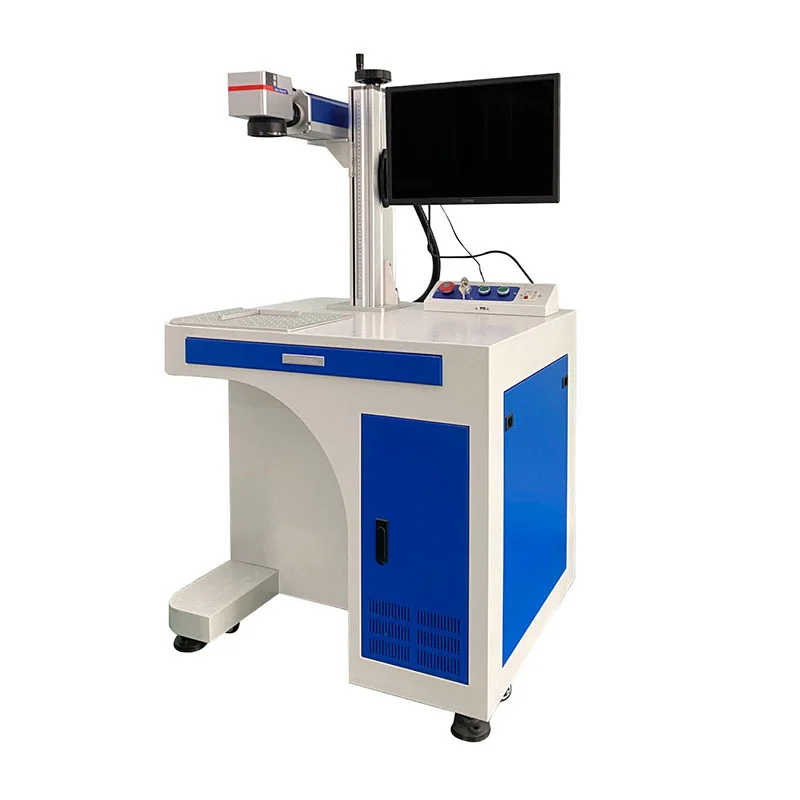
The price of a laser marking machine depends on the complete configuration and the job it must perform. A quotation for an open desktop marker cannot be compared directly with an enclosed production station that includes extraction, fixtures and data integration. Without the application and delivery scope, a headline price tells a buyer very little about the usable investment. This guide explains the main cost drivers and shows how to request comparable quotations. It does not publish unsupported price bands or imply that one standard configuration fits every factory.
Start with the required material and result
Define the complete purchasing scope
The source family is selected around the actual surface and desired effect. Fiber machines are commonly evaluated for metals, UV markers for suitable sensitive materials and fine identification, and CO₂ systems for selected non-metal applications. A MOPA source may be justified by a particular contrast or pulse-control requirement. These options have different component and operating arrangements. Explain the mark first so suppliers can quote a suitable process, rather than choosing a low-cost technology that has not demonstrated the result you need.
Compare source, scanner and optics together
Source configuration and evidence
Nominal power alone does not define a machine's capability or price. Ask the quotation to identify the source model and rated power, scanner, controller, selected lens and software. Field size, working distance and focus access can influence the practical workstation arrangement. Additional pulse control or a different source architecture may change cost without producing a worthwhile benefit for a simple marking task. Compare what is included and how the selected configuration performed during sample testing. A component description is more useful than an unexplained premium or budget model label.
Include the complete workstation
An enclosure, interlocks, part fixture, focus adjustment, extraction and suitable loading arrangement may be essential to the actual installation. Determine whether those items are included, optional or supplied by your own integrator. If the supplier quotes an open machine for incorporation into a guarded cell, document that responsibility explicitly. Do not treat a low bare-machine price as the final installed cost. The complete production setup must fit your site, the operators' tasks and the process requirements established during the project review.
Understand the effect of handling and integration
A rotary axis, indexing fixture, conveyor interface or vision arrangement adds both components and engineering work. Software compatibility, trigger signals, data transfer and reader integration need a defined scope. Confirm which functions are included in the standard controller and which require additional development. A customer database connection is not established merely because the marking software can display variable text. Ask suppliers to identify responsibilities, acceptance tests and deliverables. A clear integration boundary helps prevent later disagreements over a function that one party assumed was included.
Calculate cost per accepted part
The purchase price is only one element of the decision. Estimate the full cycle, including loading, locating, data handling, marking, checking and unloading. Consider expected utilization, consumables or filters, maintenance, rejected marks and operator training. A machine that marks quickly but is difficult to load may not produce the expected output. Use the same artwork and parts to compare options. Avoid a payback calculation based on scanner travel speed or a supplier's unrelated demonstration, because neither represents your complete production sequence or accepted-part rate.
Separate shipping price from machine price
Request the named place or port, trade term, packing, freight and insurance arrangements. EXW, FOB and CIF allocate responsibilities differently; they are not interchangeable labels for an identical delivered cost. Determine who handles destination clearance and which duties, taxes, unloading or local delivery charges remain with the buyer. Confirm the order's production lead time separately from carrier transit estimates. The AODEQI shipping policy provides a general framework, while the accepted quotation should identify the arrangements and costs specific to the actual shipment.
Review documents, training and support
Ask for the documents applicable to the selected machine and destination, rather than accepting a generic certification image as proof of coverage. Confirm the operating instructions, electrical requirements, training format, installation guidance and spare parts support. Review the warranty policy, including how faults are assessed, how replacement parts are arranged and which responsibilities are addressed in the order. Support scope can influence the practical value of a quotation. A clearly documented service arrangement is more useful than a broad promise of lifetime assistance with no defined process.
Use a consistent quotation comparison sheet
Give each supplier the same material specification, artwork, required marked area, part dimensions, quantity and acceptance criteria. Record the source and power, field, controller, workstation, accessories, tested cycle, shipping scope and warranty side by side. Mark every unresolved item for clarification before making a price comparison. Ask whether any workpiece preparation or cleaning is necessary and include it in the evaluation. An itemized sheet exposes differences that a single total hides and gives the purchasing team a practical record of what the selected price actually covers.
Request a configuration-based price
Send AODEQI photos or drawings of the part, its material and finish, the marking file, production requirement and destination. State whether you need a bench station, a guarded installation, integration or a handheld arrangement. Where compatibility is uncertain, begin with a sample test. The resulting quotation can connect a demonstrated marking process to a defined supply scope. That is the most useful way to compare laser marking machine prices: assess the complete solution, the evidence behind it and the costs needed to put it into productive use.