AODEQI · BUYING & APPLICATION GUIDES
Color Marking on Anodized Aluminum with MOPA: What to Expect
Distinguish dark and light marking on anodized aluminum from stainless steel color effects. Learn how to specify and test a MOPA marking process.
Searching for color marking on anodized aluminum with a MOPA laser often brings together several different surface effects. Some examples show light lettering created by changing or removing a colored anodized layer. Others show a dark mark on selected anodized surfaces. Multicolor oxide effects demonstrated on stainless steel are a different application. This guide helps buyers distinguish those results, describe the desired appearance and evaluate a realistic process. The objective is to approve the finish on your own part, rather than assume a machine can print arbitrary colors on any anodized aluminum.
Identify the aluminum finish precisely
Coating effects versus metal colors
Record the alloy, anodizing type, nominal layer information, dye color, sealing condition and any additional topcoat. If you do not control every treatment detail, obtain the available specification from the part or finishing supplier. Similar-looking pieces can respond differently because their surface systems are not identical. Provide multiple representative samples, ideally covering normal incoming variation. Include any protected functional areas and describe whether the component is decorative, handled frequently, exposed outdoors or used in an environment where the surface layer has an important protective role.
Separate three common meanings of color marking
Test the actual surface
First, a laser may create light or contrasting information within a colored surface. Second, an appropriate MOPA process may create a dark result on certain anodized aluminum finishes. Third, suitable stainless steel or titanium can show decorative color effects through controlled surface processes. These are distinct mechanisms and purchasing requirements. Trotec's anodized aluminum marking guidance distinguishes its black-marking example from stainless steel tempering colors. Do not use a stainless color sample as evidence that an aluminum housing can reproduce the same palette.
Understand what MOPA control contributes
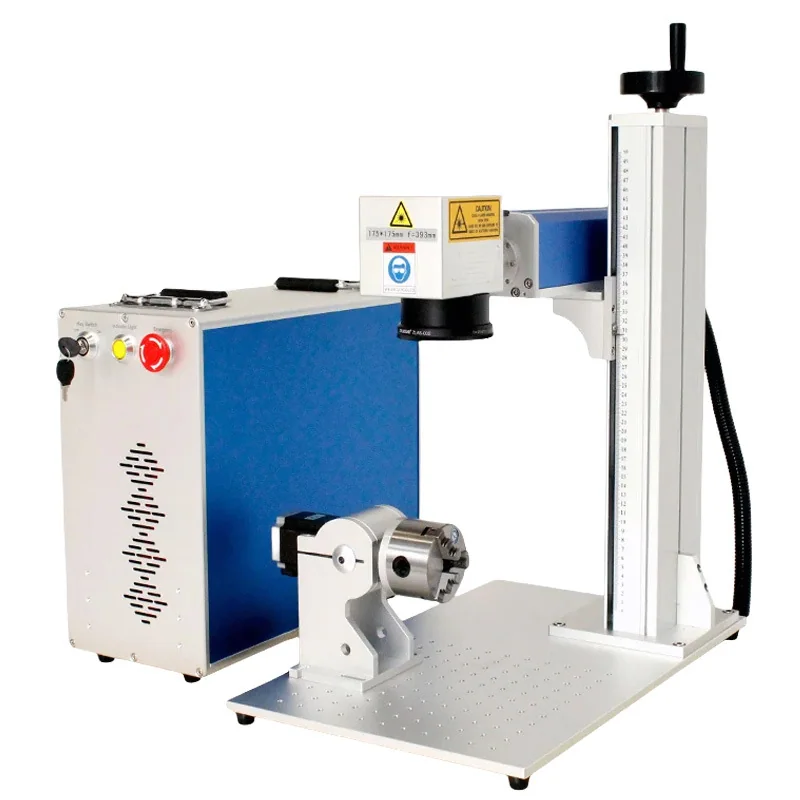
The MOPA fiber marking machine offers source-dependent pulse control that can help evaluate contrast and surface effects. The actual pulse duration and frequency ranges depend on the quoted source. They should be confirmed in technical documents, not inferred from the word MOPA alone. Additional control gives the application developer more combinations to assess, but also makes a stable recipe and test record important. Ask the supplier to identify the source, power class, lens and settings used for an acceptable sample so the proposed configuration matches the demonstrated process.
Specify the desired appearance in a useful way
Provide an approved visual reference or a clear description of the required contrast. Explain the viewing direction, lighting and any cosmetic inspection criteria. State whether exposing the underlying aluminum is allowed or whether the anodized surface must meet a defined condition after marking. Distinguish a white identifier on a dark housing from a black code on a light finish. If a brand color must be matched precisely, discuss whether laser marking is an appropriate process before treating a photograph or screen image as a color specification.
Test the exact artwork and marked area
A small line of text and a large filled logo can produce different visual uniformity and cycle times. Use the real character size, line thickness, code geometry and fill pattern during development. Include the smallest text and the largest solid area that production must handle. For curved housings, document the fixture and focus arrangement. If the mark will be read automatically, evaluate reading and verification requirements as well as appearance. Reflective light-colored surfaces can make an apparently attractive code difficult to read under the intended production lighting.
Assess the finished surface after service exposure
Appearance immediately after marking is only one acceptance point. Where relevant, inspect the mark after cleaning, rubbing, normal handling or environmental exposure defined for your component. If the anodized layer contributes to corrosion protection or insulation, involve the responsible engineering team in deciding the permitted surface change and test method. Do not infer that a mark leaves every protective property unaffected merely because the engraving is shallow or the process is marketed as gentle. The necessary evidence depends on what the part must do in service.
Establish a process window rather than one attractive setting
Keep the artwork, focus, fixture and inspection conditions controlled while testing representative pieces. Record the settings that produce acceptable results and the nearby conditions where contrast or surface quality becomes unacceptable. Repeat the approved process on more than one sample from the relevant finish batches. This helps reveal sensitivity to incoming variation. A single demonstration can establish that an effect is possible, but a production evaluation should also establish whether it can be reproduced consistently within the tolerances and operating conditions agreed for the actual application.
Compare the complete marking solution
The quotation should identify the source and optics, software compatibility, fixture requirements, guarding and extraction. Include any rotary or positioning accessory needed to access the marked surface. Ask whether the proposed result needs additional surface preparation or cleaning and whether those steps belong inside the quoted production cycle. Review the fiber option as well if the requirement is straightforward identification rather than a specific MOPA-dependent effect. An additional capability is valuable when it solves a demonstrated requirement, not simply because the source label sounds more advanced.
Send a clear evaluation request
For an anodized aluminum project, send the finish specification, representative parts, actual artwork, permitted surface change and production quantity. Describe how the mark will be judged and any service tests needed. Ask AODEQI to evaluate the desired contrast and document the proposed configuration through a sample test. If your real goal is multicolor decorative marking on bare stainless steel, state that separately. Keeping those applications distinct improves technical communication, prevents unrealistic expectations and helps purchasing compare evidence of the result that the finished product actually requires.